Whether it is daily tiredness or a chronic condition— there is a guided path back to vitality.
Whether you are brushing aside everyday acidity, bloating, and unrefreshed sleep—or managing diabetes, blood pressure, weight, or recovery after a hospital stay—our doctors and coaches help you ease your symptoms, rebuild your energy, and safely manage or reduce your medicine load alongside your physician.
Understand your wellbeing. Choose your next step.
Reflect on your energy, sleep, life balance and stress. Get a simple summary to help you choose practical next steps alongside your usual healthcare.

A two-minute reflection on everyday wellbeing
Your everyday experiences can add useful context to conversations about your health.
Your lab report says 'Normal.' Why does 3 PM feel like 18%?
Clear, Practical Guidance from Your First Step
Check energy, sleep, digestion, movement, and stress right here.
Instant aNORMALy Wellbeing Score (0–100) across Health, Life, and NEVI.
Stays in your browser; copy a summary for your doctor anytime.
Check Your Everyday Wellbeing
How does your energy feel 60–90 minutes after lunch?
Choose Your Lens · Personal, Workplace & Community Pathways
Listen to Your Everyday Rhythm. Before Fatigue Becomes Routine.
Start with six quiet questions in your browser and receive a clear 0–100 summary.
Start with a self-check, explore in detail, or request a review.
Quick check (Quick aNORMALy)
Six everyday questions for an instant snapshot of energy, sleep, digestion, movement, and stress.
Detailed assessment (Advanced aNORMALy)
Maps Seven Areas of Life, NEVI — Neuro Emotional Vitality Index, and 24-hour food recall to highlight candidate E2A (Areas to Address).
Professional review (Professionally Reviewed aNORMALy)
A 30-minute reviewer call to agree on your top three practical daily priorities alongside your treating doctor.
Small-Group Reporting Safeguards
Employers never see individual responses; small groups under 10 are automatically masked.
Participation details are not shown for this group to protect individual privacy.
When a department or subgroup has fewer than 10 completed responses (currently 6), group counts and percentages are hidden in organizational reports.
1. Quick Check
Runs locally in your browser with no account required.
2. Workplace
Aggregated summaries only when 10 or more people participate.
3. Professional Review
Shared with a reviewer only when you explicitly opt in.
Twenty years on plastic chairs and factory floors. Before a single line of code.
These archival photographs from 2012–2015 are just a few preserved glimpses from many more organizations, manufacturing plants, banks, schools, and public institutions where our clinical and lifestyle medicine team led earlier health education sessions—demonstrating the field experience that informed today's wellbeing reflections.
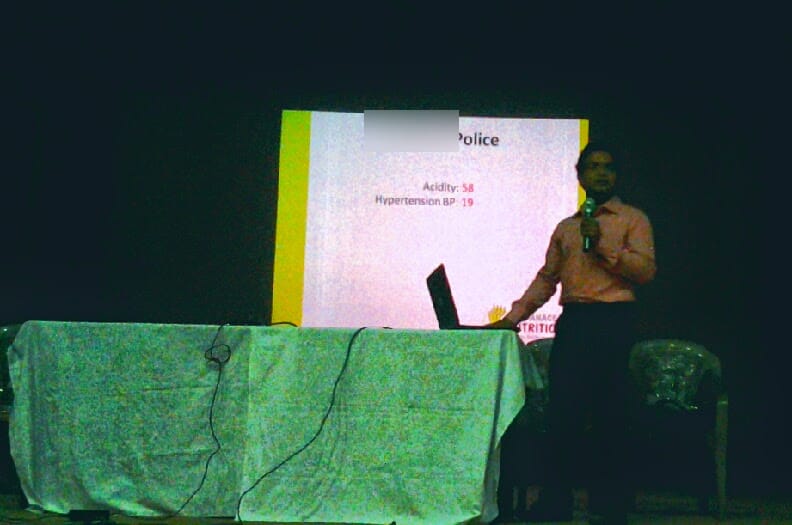
Group Health Summary Slide: “Acidity: 58 · Hypertension BP: 19”
During a 2013 workforce health session at one of the police commissionerates, we summarized group-level health patterns—such as acidity and elevated blood pressure readings—to guide collective health education.
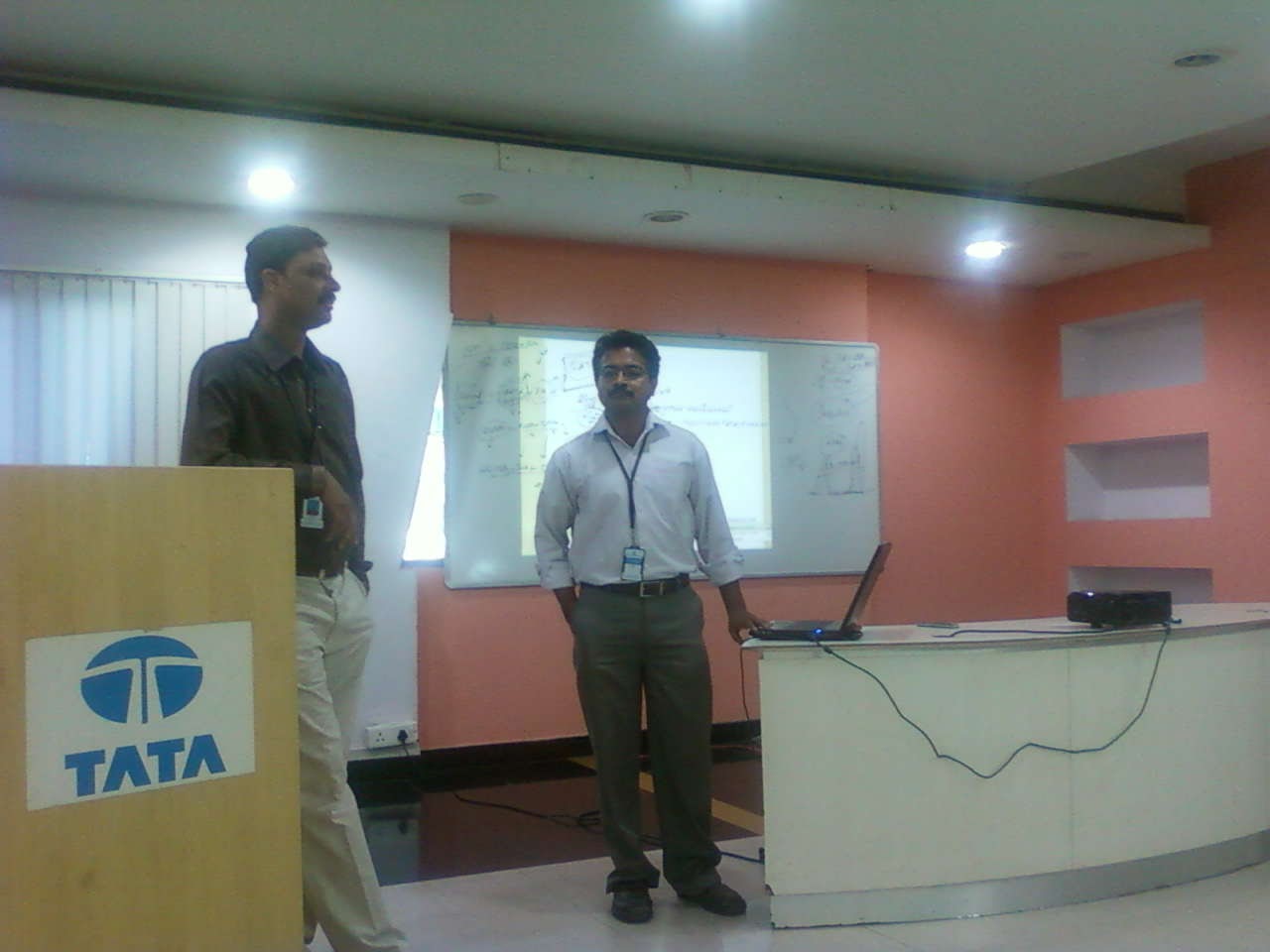
Executive & Workforce Wellbeing Briefings
In workplace sessions, employees frequently asked about afternoon fatigue, sleep quality, and meal routines between their annual medical checkups.
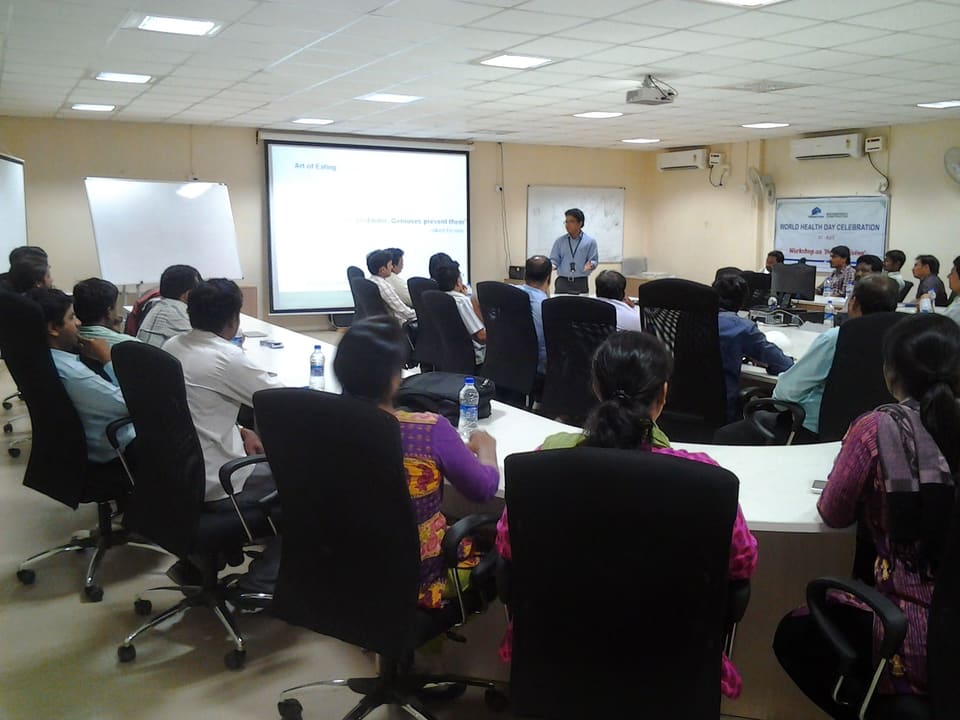
“Art of Eating & Healthy Living” — World Health Day Workshop
Engineering leaders and site managers discussed practical ways to balance meal timing, hydration, and long working hours.
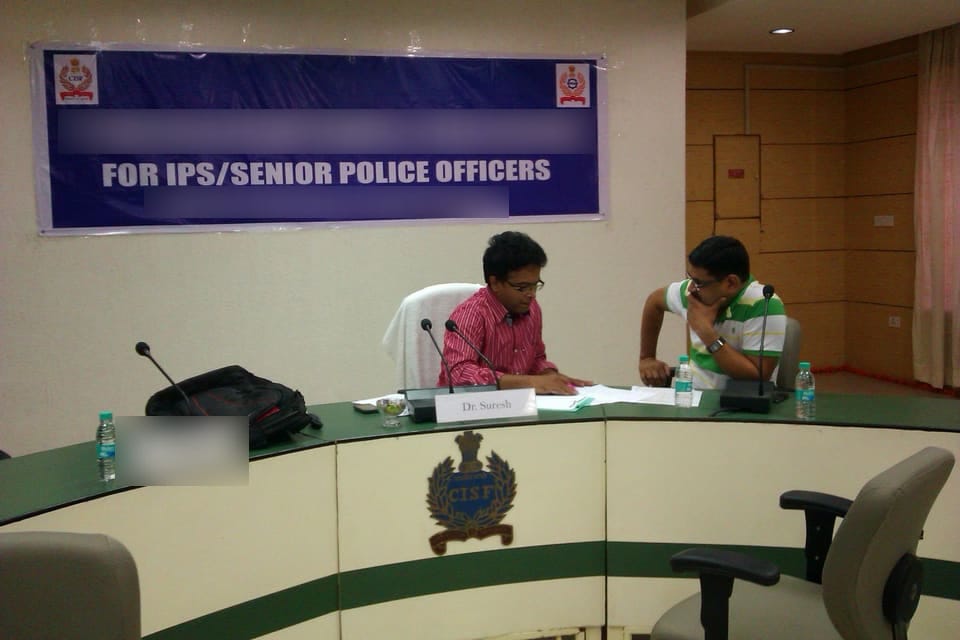
Health & Stress Management Workshop for IPS & Senior Police Officers
Sessions with command-level IPS and CISF officers highlighted the importance of sleep recovery and unwinding after high-responsibility shifts.
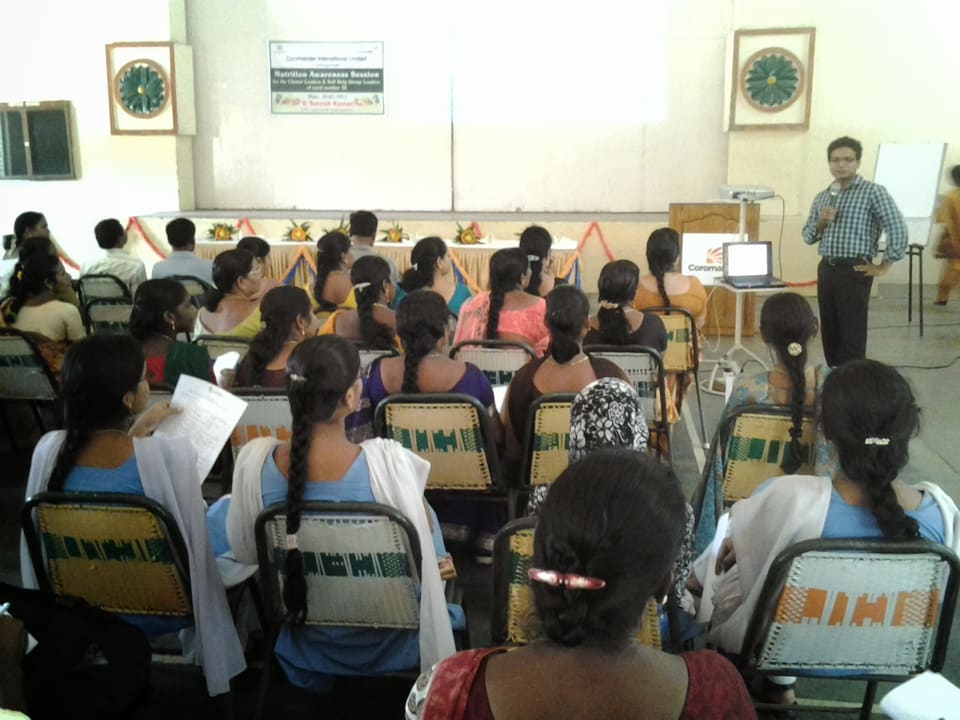
Nutrition & Health Awareness for Cluster & Self-Help Leaders
Sharing practical nutrition education with cluster leaders and women's self-help group champions helped bring everyday health habits into households.
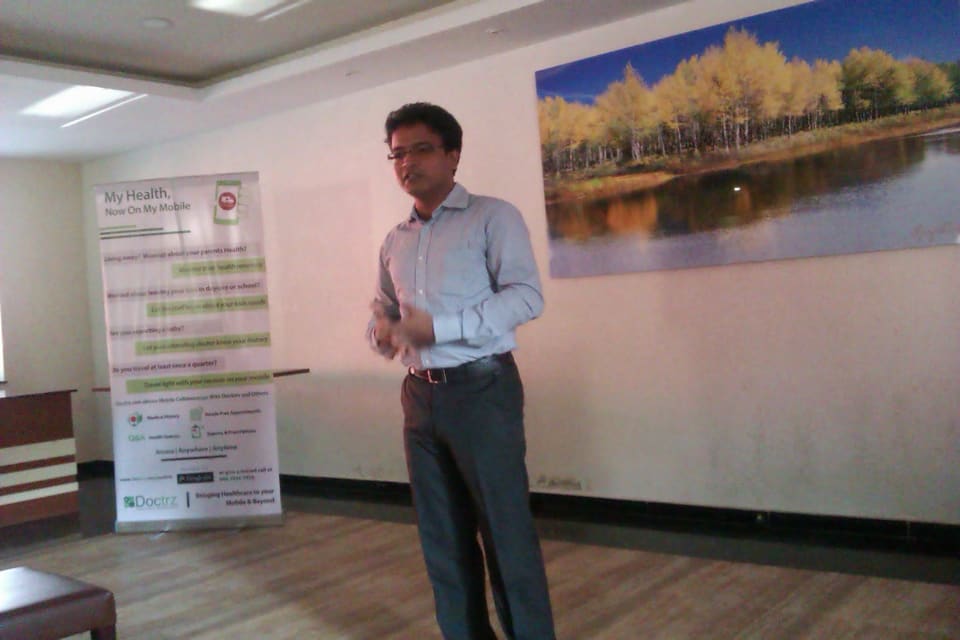
Early Mobile Health Record Initiative Across Life Stages
Our 2014 banner invited families to organize health records across parents, school children, pregnancy, and work travel.

Health Education Session for Banking Leadership & Staff
Banking professionals shared challenges around long sitting hours, late meals, and seasonal workload pressure.

Dedicated Women's Workforce Sessions on Everyday & Hormonal Wellbeing
Dedicated sessions created a comfortable space to discuss menstrual health, fatigue, and household balance.
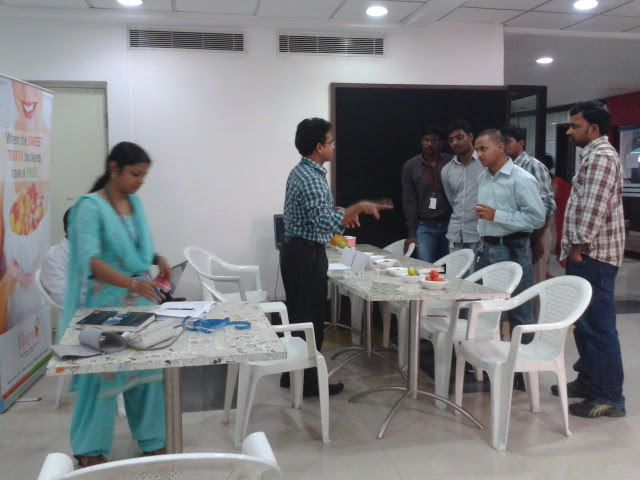
On-Site Cafeteria Nutrition Desks (“When the Sweet Tooth Beckons”)
Supporting everyday habits meant meeting people where they eat—at the workplace cafeteria counter and dining table.
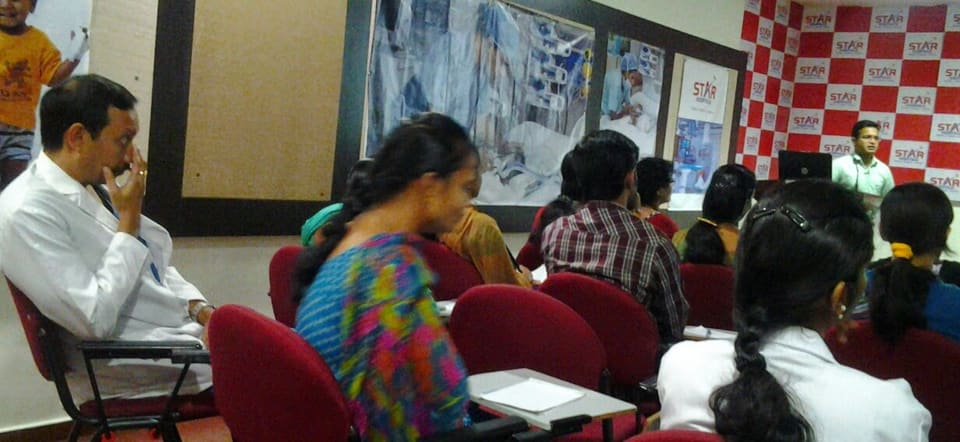
Discussions with Hospital Physicians, Surgeons & Clinical Teams
Working alongside hospital physicians reinforced that lifestyle guidance should always support—never replace—a treating doctor's care.
Beyond the boardroom. On lawns, beside fruit tables, and in classrooms.

Sitting on plastic chairs on the grass with a clipboard, listening unhurriedly to mothers, elders, and families in the community.
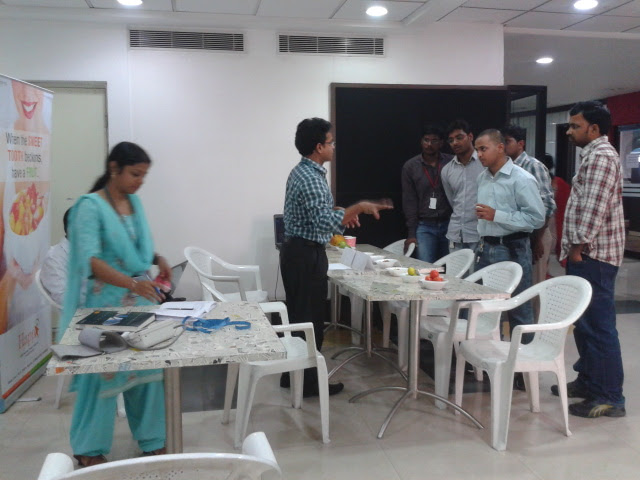
Standing beside bowls of fruit at dining and cafeteria tables, discussing simple everyday meals for office-goers and families.

Teaching students in university lecture halls and mentoring lifestyle coaches to support patients alongside their treating doctors.
Supporting Your Care, Alongside Your Treating Doctor.
Lab tests (such as HbA1c) and medical diagnosis stay with your physician—aNORMALy adds everyday food, sleep, movement, and stress context to support your visit.
Frequently Asked Questions
Supporting Reference · Methodology & Prevention FrameworkExplore the 20-Parameter Framework, Cohort Weightage Calibrator & Prevention StagesExpand Reference Details
A Familiar Everyday Compass Alongside Healthcare
In personal finance, a Credit Score (300–900) summarizes payment habits into a simple reference number. Similarly, the aNORMALy Wellbeing Score (0–100) brings together responses about everyday health, life balance and stress so you can choose practical next steps alongside your usual healthcare.
See how our 20-parameter framework adjusts its three-pillar weights across different daily routines:
Balances sedentary work patterns (40%) with life balance (30%) and evening mental switch-off capacity (30% NEVI).
Afternoon energy, morning sleep refreshment, digestive comfort, daily movement, checkup context, and routine symptom reliance.
Physical living, work & learning, relationships & family, emotional balance, social belonging, financial wellbeing, and personal meaning (informed by whole-person wellbeing models).
Evening switch-off, freedom from overdrive, screen boundaries, calm under pressure, physical stress signals, restorative breathing, and next-day recovery.
Four Stages of Wellbeing & Prevention Support
Public health education via Dr Sure Thinks Blog and clinical learning via ALSM Academy.
Supporting healthy morning routines, hydration, and sleep habits across schools and colleges.
Reflecting on everyday energy, life balance, and stress across households and organizations.
Structured lifestyle coaching and professional review alongside your treating physician.
Understand your wellbeing. Choose your next step.
Reflect on your energy, sleep, life balance and stress. Get a simple summary to help you choose practical next steps alongside your usual healthcare.